
Cloud-Based vs Standalone Access Control: Diyu as a Commercial Access Control System Supplier for Hotels
Oct 12, 2026
Shenzhen, Guangdong Oct 12, 2026 (Issuewire.com) - Selecting security access infrastructure for commercial real estate requires balancing network dependency, credential administrative overhead, and local physical security. Deploying modern cloud based access control systems (https://diyusmart.com/q/h/DIYU%2BHO-X200%2BCommercial%2BSmart%2BLock%2BGlass%2BWood%2BWiFi%2BTuya%2BApp%2BBiometric%2BFingerprint%2BOffice%2BAccess%2BControl%2BSystem%2BCloud%2BMemory%2BCard%EF%BC%88HO-X200%EF%BC%89.html) enables multi-site operators to issue mobile credentials instantly and maintain unified audit logs.
As an established hardware manufacturer, Shenzhen Diyu Smart Co., Ltd. (https://diyusmart.com/q/h/com/index.html) operates as a commercial access control system supplier, providing both networked wireless locks and standalone biometric readers to match building operational requirements.
The architectural choice between cloud-managed access and standalone physical door controllers is not simply a matter of technology preference. It represents a fundamental operational decision about where credential storage, user authentication, and system administration reside. Evaluating how cloud-based and standalone systems behave during network disruptions and high-turnover check-in workflows ensures that property developers deploy dependable physical security.
Cloud-Based and Standalone Systems Assign Responsibilities Differently
Understanding the architectural differences between centralized cloud management and local door control establishes the foundation for sound access control specification. Selecting the right model requires matching communication topologies with daily administrative workflows.
Cloud-Based Access Control Centralizes Administration
Cloud-based architectures connect perimeter gates, interior doors, and turnstiles to central web platforms through encrypted IP backhaul. Administrators manage permissions, revoke lost credentials, and inspect door status from any web browser or mobile application. Because credentials synchronize across distributed databases, an employee or hotel guest can navigate multiple checkpoints using a single mobile pass or RFID badge.
Furthermore, automated webhooks notify security teams immediately if a door is forced open or held ajar beyond preset thresholds.
Standalone Access Control Keeps Decisions at the Door
By contrast, a stand alone access control system operates without any external server or network connection. All user credentials, fingerprint templates, and door relay timers reside entirely within the non-volatile memory of the local reader or controller. When an authorized user scans a badge or inputs a PIN, the local processor validates entry rules internally and energizes the lock relay directly.
This architecture eliminates structured network cabling, switch ports, and recurring software licensing fees. However, modifying permissions requires physical on-site programming at each door, making standalone hardware impractical for properties with frequent credential changes.
Diyu's Standalone Reader Defines the Local-Control End of the Spectrum
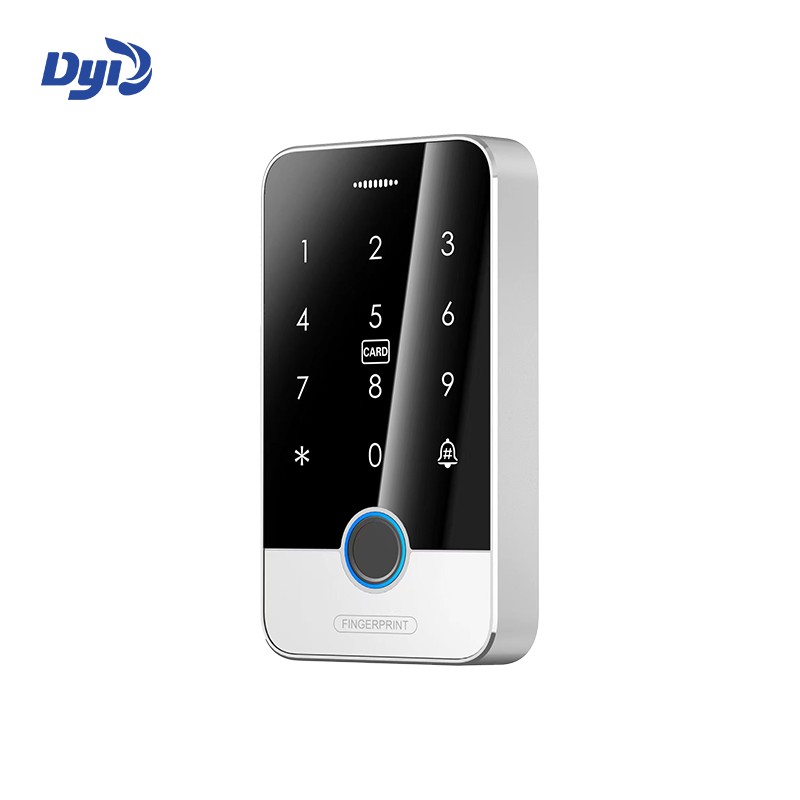
For standalone commercial applications, Diyu Smart manufactures the HO-X300A standalone access control reader. Engineered for commercial office doors, storage facilities, and perimeter entry points, the HO-X300A provides robust local security without requiring network infrastructure.
Operating on a standard DC 12V power supply, the unit stores up to 300 fingerprint templates alongside capacitive PIN codes and contactless RFID cards. The integrated internal relay interfaces directly with electromagnetic shear locks, electric strikes, and motorized gates. Administrators configure user privileges directly on the device using master programming cards or keypad sequences, making it an ideal solution for single-door installations.
Networked Commercial Locks Define the Remote-Management End
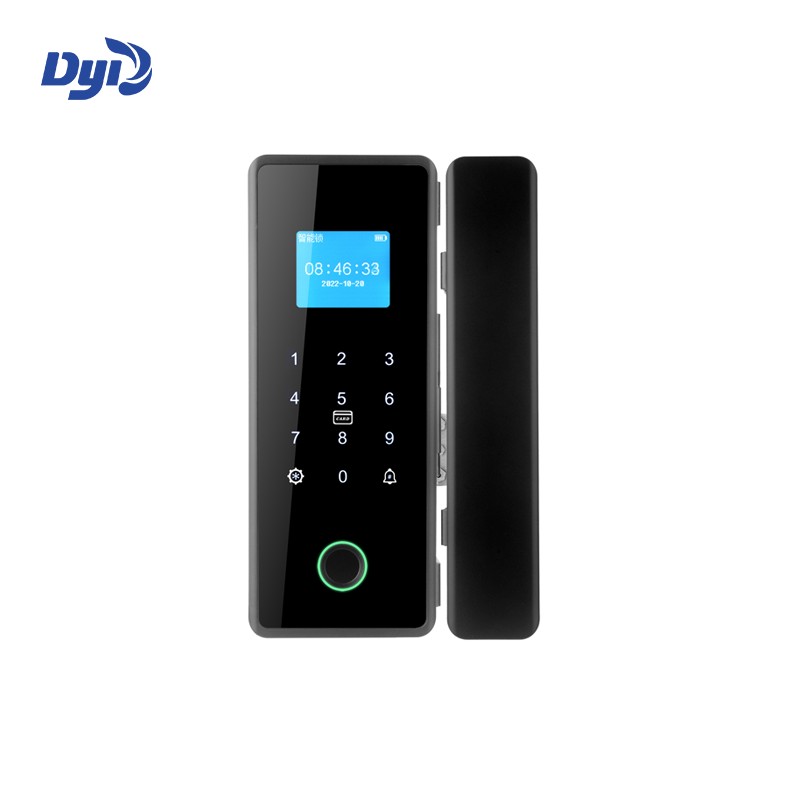
Where multi-door facilities require dynamic credential administration, Diyu Smart provides cloud-managed access hardware designed for high-turnover commercial environments. The HO-X200 commercial smart lock combines biometric security with cloud-managed convenience across commercial glass and wooden doors.
It integrates a high-resolution fingerprint scanner, a numerical touch keypad, an RFID reader, and internal WiFi connectivity to connect directly to cloud software via Tuya and open API interfaces. Property managers can issue time-limited digital PIN codes remotely for visitors, monitor battery levels, and receive real-time unlock notifications.
This networked architecture bridges the gap between traditional enterprise access control panels and standalone door locks, offering flexible administration across corporate workspaces and boutique hotel guestrooms.
Controllers, Readers, Keypads, and Turnstiles Have Different System Roles
Comprehensive commercial access control systems organize physical hardware into specialized components to coordinate entry workflows. At high-throughput main lobby entrances, pedestrian barriers require specialized turnstile access control readers capable of verifying credentials within milliseconds. Optical turnstiles and speed gates utilize optical sensors and motorized flaps to process heavy employee traffic without creating lobby bottlenecks.
For parking entrances and vehicle checkpoints, dedicated gate access control controllers interface with motorized barrier arms, long-range RFID readers, and loop detectors. Secondary utility rooms and staff stairwells utilize an all-in-one access control keypad to enforce simple numeric access for authorized maintenance personnel.
In high-security administrative zones, deploying a specialized biometric door access control system eliminates the risk of shared plastic keycards, ensuring that only authenticated individuals gain physical entry.
Hotels, Offices, and Parks Need Different Credential Lifecycles
Access requirements diverge significantly depending on the operational profile of the property and its user population. Designing an effective deployment requires analyzing user turnover rates and security perimeters.
Hotels
Hospitality access demands seamless integration between guest reservations and physical locks. A modern hotel access control system must issue temporary credentials that automatically activate at check-in time and expire at checkout.
In a comprehensive hotel door access control system, front-desk staff program physical RFID keycards or deliver digital mobile keys directly to guest smartphones. Standalone readers without remote programming capability are unsuited for hotel guestrooms due to continuous turnover.
Office Buildings
Corporate multi-tenant offices manage permanent staff credentials, temporary visitor badges, and scheduled deliveries. System administrators require role-based access levels, granting employees continuous entry to shared lobbies while restricting tenant suites to business hours.
Cloud-managed systems streamline employee onboarding and allow immediate badge deactivation when personnel depart.
Parks and Multi-Building Sites
Industrial manufacturing parks and university campuses manage layered security perimeters across sprawling physical footprints. The outer perimeter utilizes automated vehicular gates and turnstiles, while production workshops utilize biometric readers and research labs require multi-factor authentication.
Cloud-based platforms coordinate these heterogeneous checkpoints across multiple buildings into a single administrative console.
PMS and API Integration Should Be Specified as a Workflow
Access control achieves its full business value when embedded directly into existing enterprise operations software. Deploying cloud-connected hardware allows property management systems to automate credential generation. Booking platforms call open RESTful APIs to generate secure PINs or mobile Bluetooth tokens, while webhooks notify managers upon initial tenant entry to trigger energy-saving scenes.
Integrators must specify API contracts clearly prior to hardware procurement. Networked door controllers must support standard JSON payloads, TLS encryption, and reliable offline failover mechanisms to maintain building security and ensure operational stability during network outages.
Compare Failure Modes Before Comparing Feature Lists
Evaluating access hardware requires analyzing how the system behaves during power outages, network disconnections, and fire emergencies. In a well-engineered installation, physical access control systems utilize battery-backed power supplies during electrical failures. Life safety codes dictate that emergency stairwell doors and exit paths release automatically upon fire alarm activation via fail-safe magnetic locks.
During wide-area network dropouts, cloud-connected controllers must operate autonomously. Diyu Smart's networked controllers maintain local credential caches and offline event logs, ensuring that tenants can enter normally while data syncs automatically once internet connectivity restores.
Select the Architecture by Administration Scale
A systematic selection sequence guides access control procurement by aligning credential update velocity with physical infrastructure. High-turnover hotels and dynamic commercial offices require cloud-managed controllers to automate credential issuance, while static utility closets and remote storage units operate effectively with standalone biometric readers.
Where pulling structured cabling is cost-prohibitive, wireless smart locks provide rapid deployment, provided locking mechanisms strictly comply with regional emergency egress codes through fail-safe electromagnetic locks on exits and fail-secure hardware on perimeters.
Security integrators and commercial property operators can contact Diyu Smart to evaluate access hardware schedules, or explore the full commercial access control lineup on the Diyu Smart official website (https://www.diyusmart.com/).
Source :Shenzhen Diyu Smart Co., Ltd.
This article was originally published by IssueWire. Read the original article here.
More News









Recommended





YOUR NEWS, OUR NETWORK.
Do you have Great News you want to tell the world?
Be it updates about your business or your community, you can make sure that it’s heard by submitting your story to our network reaching hundreds of news sites across 6 verticals.